The reason chasing feels awkward is that it is usually framed as a confrontation. It almost never is. In service businesses the overwhelming majority of late invoices are late because they are sitting in an approval queue, or the person who signs them is away, or it went to the wrong inbox.
Which means the goal of a chaser is not to apply pressure. It is to find out where the invoice is stuck and remove whatever is blocking it.
Send it before it is late
The most effective message in the sequence is the one that goes out three days before the due date, and it is the one almost nobody sends. Most of that is decided by the terms, before the invoice exists: invoice payment terms that actually get you paid.
It is not a chase. It is a heads up, and it costs the relationship nothing:
Just a heads up that invoice INV-0042 falls due on Thursday. No action needed if it is already scheduled. If you need anything from us to get it processed, reply and we will sort it out.
That last sentence is doing the real work. It gives a busy person a reason to reply now rather than after it has gone late.
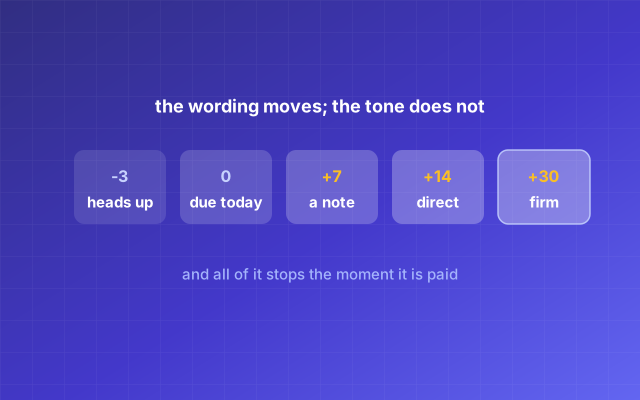
Escalate in stages, not in tone
The mistake is jumping from silence to firmness. Each message should be slightly more direct than the last, and each should ask for exactly one thing.
| When | What it is | What you ask for |
|---|---|---|
| 3 days before | Heads up | Nothing |
| On the day | Due today | Nothing, or the link |
| 1 to 7 days late | Polite note | Who signs it off |
| 8 to 21 days late | Following up | A payment date |
| 22 to 45 days late | Firm | A reply, even a bad one |
| Over 45 days | Direct | A date, or an escalation path |
The line that unblocks the most invoices
Somewhere around the one week mark, this is the most useful thing you can write:
These things usually just get stuck in an approval queue. If you can point us at whoever needs to sign it off, we will chase it from our side instead.
It does three things at once. It removes blame, it acknowledges that the delay is probably structural, and it offers to take the work off their plate. People reply to that.
What not to do
Do not threaten early. Mentioning interest or legal action at two weeks turns an administrative delay into a dispute. Keep those for genuinely delinquent accounts, understand that using them ends the relationship, and if your agreement does set a late fee, work out what it comes to before you mention it.
Do not apologise for asking. "Sorry to bother you about this" invites the reader to treat it as optional. You did the work. Be warm and be direct.
Do not send on a Sunday. It reads as pestering, it will not be actioned until Monday, and it makes you look like you have nothing better to do.
Do not chase manually and inconsistently. The invoice that gets chased twice in a week and then forgotten for a month is worse than one on a steady schedule.
Make it stop when it should
Whatever you use to chase, it has to stop the moment an invoice is paid. (RunwayDue's invoicing does this for you.) Nothing damages a client relationship faster than a reminder for something they settled a fortnight ago, and nothing makes you look less organised.
The same goes for the invoice you know is late for a good reason. If a client has told you the payment run is on the fifteenth, pause the chasing on that one invoice rather than letting it fire on the eleventh.
When the answer really is no
Occasionally an invoice is not stuck, it is disputed, and nobody has told you. That is why the firmer messages ask for a reply rather than a payment. A client who says "we are not paying this because the scope changed" has given you something to work with. Silence has given you nothing.
Ask early enough and directly enough that a dispute surfaces while it is still small.
Frequently asked questions
How soon should I chase an unpaid invoice?
Before it is late. The most effective message in the whole sequence goes out about three days before the due date, and it is the one almost nobody sends. It is not a chase, it is a heads up that costs the relationship nothing, and it gives a busy person a reason to reply now rather than after the invoice has gone overdue.
What should the first reminder actually say?
That the invoice falls due shortly, that no action is needed if it is already scheduled, and that you will sort out anything they need from you to get it processed. That last offer does the real work. Most late invoices are stuck in an approval queue rather than being refused, so the useful question is what is blocking it, not when you will be paid.
How many times should I follow up?
Six messages is usually the whole sequence, and each one should ask for exactly one thing. Escalate in stages rather than in tone: a heads up before the due date, a note on the day, then messages that get progressively more direct at roughly one week, three weeks and six weeks late.
Should I ask for payment or for a date?
From about a week late, stop asking for payment and start asking for a date. Somebody in accounts payable can give you a date without having the authority to release funds, so it is a request they can actually satisfy. Once you have a date you have something to hold them to.
Can I charge a late fee or mention legal action?
You can only charge a late fee if the agreement the client signed created one before the work started. A percentage typed onto an invoice after the fact is a note, not an obligation. Raising interest or legal action at two weeks also turns an administrative delay into a dispute, so keep both for genuinely delinquent accounts and understand that using them usually ends the relationship.
What if the client does not reply at all?
That is why the firmer messages ask for a reply rather than for payment. An invoice that is silent might be stuck, or it might be disputed and nobody has told you. A client who says they are not paying because the scope changed has given you something to work with. Silence has given you nothing, so ask early enough and directly enough that a dispute surfaces while it is still small.
Should reminders go out at the weekend?
No. A chaser landing on a Sunday morning reads as pestering, it will not be actioned until Monday anyway, and it makes you look like you have nothing better to do. Skip weekends and send on working days.
Does RunwayDue chase invoices automatically?
Yes, on the Pro plan and above. The default schedule is three days before the due date, on the due date, then seven, fourteen and thirty days late, capped at six messages per invoice, with weekends skipped. You can rewrite all of it and preview exactly what would go out before switching it on, and it stops the moment an invoice is paid, voided or paused.